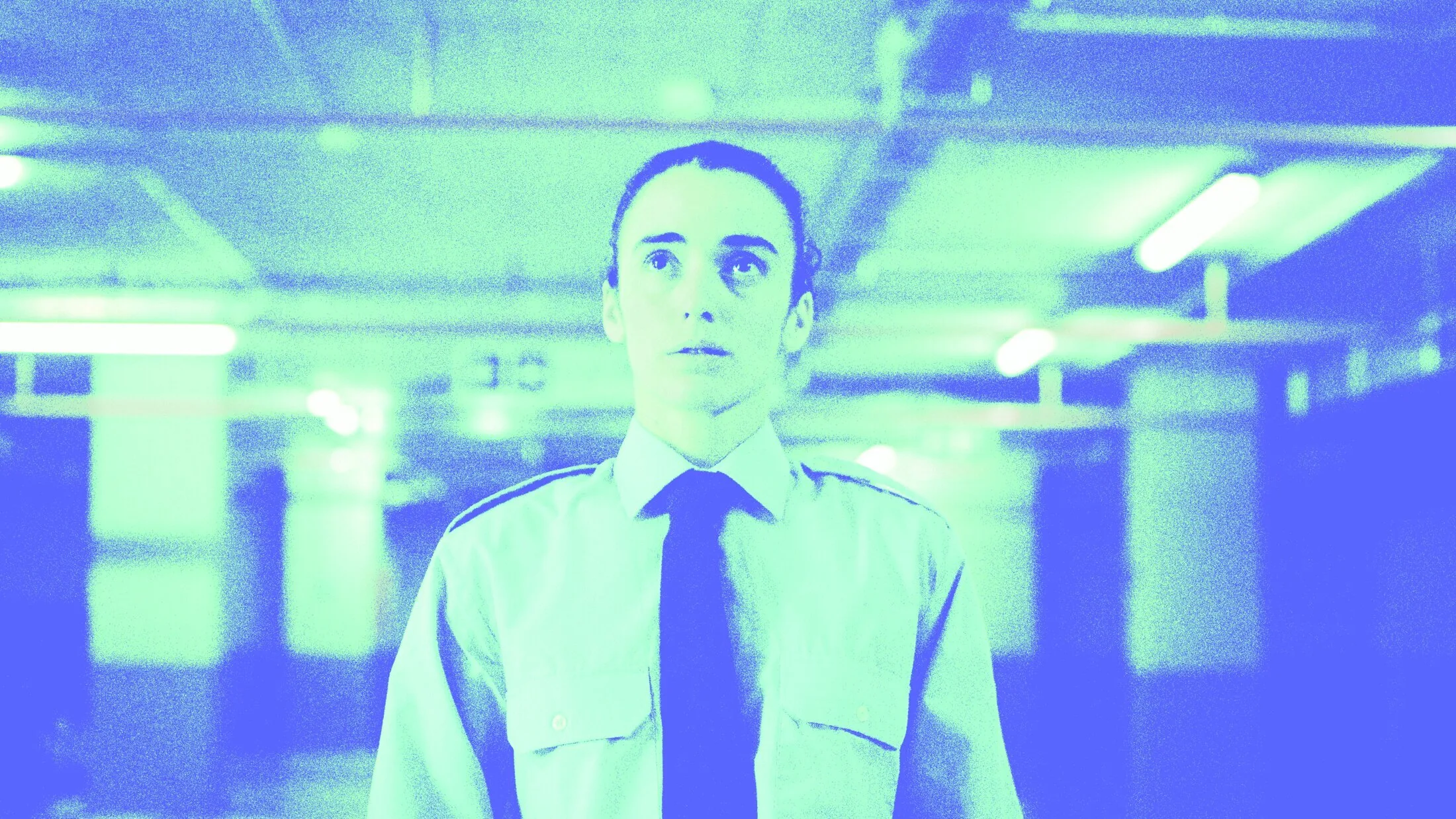
Bodies can communicate through movement precisely where the system restricts them most—every jump, step, or turn becomes a dialogue with space, an intimate idea unfolding between the security system and the performers. Each scene of the short dance film Timecode pulses like the heartbeat of a city—at once tightly structured and poetically free, with the camera capturing both the movement and the subtle transitions between the real and the inner world.
In the seemingly ordinary setting of a parking garage, two lives unfold—day and night, order and improvisation, routine and sudden ecstasy. Timecode uses dance as a subtle language of connection and liberation. At first glance simple, yet profoundly emotional, the film questions the boundaries of everyday space and the body. By bringing dance into a restricted environment that usually feels cold and functional, it reveals moments of unpredictable intimacy and playful lightness. The film invites the viewer to discover poetry in the everyday and the unusual, to find humanity where it often goes unnoticed.


